


Jaime Nacach
Marketing Strategist
I love helping small businesses with their digital marketing and business strategy. I'm a young man with a passion in entrepreneurship and international experience in business development, marketing, sales, and web/graphic design.
Find me on: Team Page | LinkedIn | Google+ | Personal Website
5 Ways to Grow your Business by Targeting the Hispanic Population

If you have been paying any attention to current demographic trends, you know that Hispanics will make up 30% of the population by 2050. Other astounding facts: In 2010 they represented one trillion dollars in buying power. The figure will rise to $1.5 trillion in 2016- a 50% increase in five years.
This presents a huge opportunity to small businesses trying to grow sales. But implementing a marketing campaign aimed at Hispanics is tricky.
Here are a couple of pointers to consider:
1. It's not just the language.
Creating a campaign for Latino customers entails much more than just translating content into Spanish. In order to connect with this audience you should speak the language and the culture. The Hispanic demographic is more complex and diverse than its mainstream media portrait. It´s made out of people with different degrees of acculturation and language command.
Some individuals are totally bilingual, and thus, consume content on English and Spanish; some others are just barely proficient in either. To maximize results, marketers should go beyond the language and find cultural elements the audience identifies with.
How to choose the best social media networks for your company

Not many people know which social media is best for their company.
There are so many on the internet these days you don’t even know where to start. So where do you start? That’s the question I suppose everyone asks themselves. But before I continue let’s just get something straight, you shouldn’t be on every platform! It’s so easy to create so many accounts but why would you want to be on Pinterest when your a Doctor.
So how do we categorize social media sites?
Ask yourself these 3 important questions.
- Who is my audience?
- What is the purpose of [blank] network?
- What is its functionality?
Let’s have a rundown on a few popular networks so you see what I mean.
8 Tactics to Spice Up Your Facebook Page or Risk Losing Customers

Forty-one percent of small businesses in the United States use Facebook.
That equates to more than 40 million small businesses on Facebook in total - an increase of 10 million businesses from last year. Thirty million of these Facebook pages are updated regularly.
The facts don’t lie: more and more businesses are joining Facebook and using it as a marketing tool. If your business isn’t one of these 40 million, my best advice is that you should create a Facebook page today or contact us so we can help you set it up right.
But this post isn’t for businesses without Facebook pages - it’s for the businesses with Facebook pages. With increasing competition, you have to make sure that your Facebook page stays relevant, interesting and engaging, or else you risk losing potential customers.
How to write memorable blog posts

When trying to write a compelling blog post, many professional content creators make a costly mistake. And I mean costly because original content is gold in terms of SEO, and when your titles are not read and your articles not clicked on (and much less shared), we have squandered the valuable opportunity to be up there.
Granted. It is hard to deliver high quality content on a regular basis. But there is so much material online that lack of inspiration and “writers-block” can no longer be an excuse for us.
Provide Real Value To Your Audience: Content Curation & Online Tools

As of 2015, the Internet has become a virtually inexhaustible source of information. Choosing relevant topics to share with audience boasts our position as experts and makes us an integral part of the conversation.
But there is a lot to do in order to fulfill this role successfully: browsing for current, relevant and reliable information, organizing it in logical fashion, and distributing it through our social media channels.
This can all be summed up in a process called Content Curation, which entails:
1. Identifying
Finding out which topics pique our audience´s interest and investigating and gathering relevant sources of information.
2. Filtering
Evaluating and choosing relevant titles to share in accordance to our editorial line and the audience´s interests.
3. Distributing
Spreading the end result through our channels.
Clearly, this is A LOT of work…. Content curating tools were invented to automatize and ease this task.
Here are some you may want to try:
Growing Your Business Online: Stages of a Company's Digital Presence

Tonight I attended a great marketing meetup hosted by the SoCal Marketing Club in San Diego's new downtown coworking space ROC. The event featured a great talk by OrganikSEO titled "Using Content to Amplify Your SEO Campaign" and it inspired me to write this short post.
Shortly after meeting Julien Brandt, OrganikSEO's founder and speaking about various online marketing topics, he shared with me his company's new "Growing your Busines Online" infographic, which shares the essential message of this blog post in a single image. In fact, this image is being shared here on Bloominari's Blog before Julien had a chance to post it on his own site, so I'm happy he gave me the opportunity to do so :-)
Growing Your Business Online Infographic
#1 Website Designer in San Diego Award 2015 by Thumbtack

We're happy to announce that our company has been rated as the 2015 #1 website designer professional in San Diego by Thumbtack.
Based on our full 5 star reviews rating, found on our Thumbtack profile here, we've made the top of Thumbtack's San Diego Web Designer Company and Web Professionals list.
11 Keys to creating an effective case study

Do you often tell “on-the-fence prospects” the same remarkable story about how your business previously helped a desperate customer, to entice them to buy?
If so, you’re on the right track.
Story telling is a valuable resource for business success.
However, changing your approach to create customer satisfaction stories that can be repeatedly shared and viewed digitally is imperative.
But you will need much more than a sheet of paper with a bunch of testimonials about how amazing your product or service is. Smart buyers need to be convinced…and nothing is more convincing than a case study.
Case studies incorporate promotional marketing with customer evidence to tell a successful story of the business coming to the rescue for the customer.
Why does your business need a case study?
How to Promote Your Non-Profit Online: Inbound Marketing Strategies
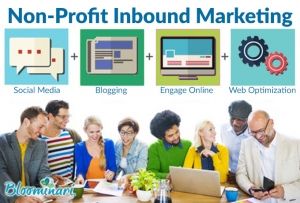
Now, don´t panic. Even if you don´t know what inbound marketing is, chances are your non-profit is already partaking in it. And when done right, it can be the most effective method for an NGO to enlist donors, supporters and volunteers.
Inbound marketing depends heavily on content. Thus, it adapts beautifully to the non-profit universe, where stories are compelling, moving and rich.
The following are some key elements of an effective inbound marketing campaign, and examples of NGOs that have applied them successfully:
1. Optimize Your Website to Increase Conversions
5 Common Misconceptions of Social Media

Many businesses may be a bit skeptical about social media. A lot of questions may run through your mind when wondering which social media is the best for you company.
Does it cost? How many posts a day? Some may even think they don’t have time for using social media.
Here are 5 common misconceptions of social media.
1. It’s free.
Social platforms are definitely free but if you want to be successful on social media you have to want to invest money on it. If you want to use organic reach just know that it’s extremely limited if you want to get noticed. Imagine you are at a concert, the people who are all the way in the front paid a lot of money to be there, then there’s the middle part of the concert venue where it wasn't as expensive but it’s neither free and you can still see perfectly. Then there’s the free ticket that doesn’t exist unless you win it but that winning ticket is one out of who knows how many others. In the end it’s better to invest in order to be seen on social media platforms. The days of free-and-easy organic social media exposure is long gone!